Yeast
Yeast – recipes with yeast for everyone!
Yeast was already known and used by ancient Greeks and Romans.
They experienced a true renaissance in 1800 when the first yeast factory was established, and their production was improved with Pasteur’s research.
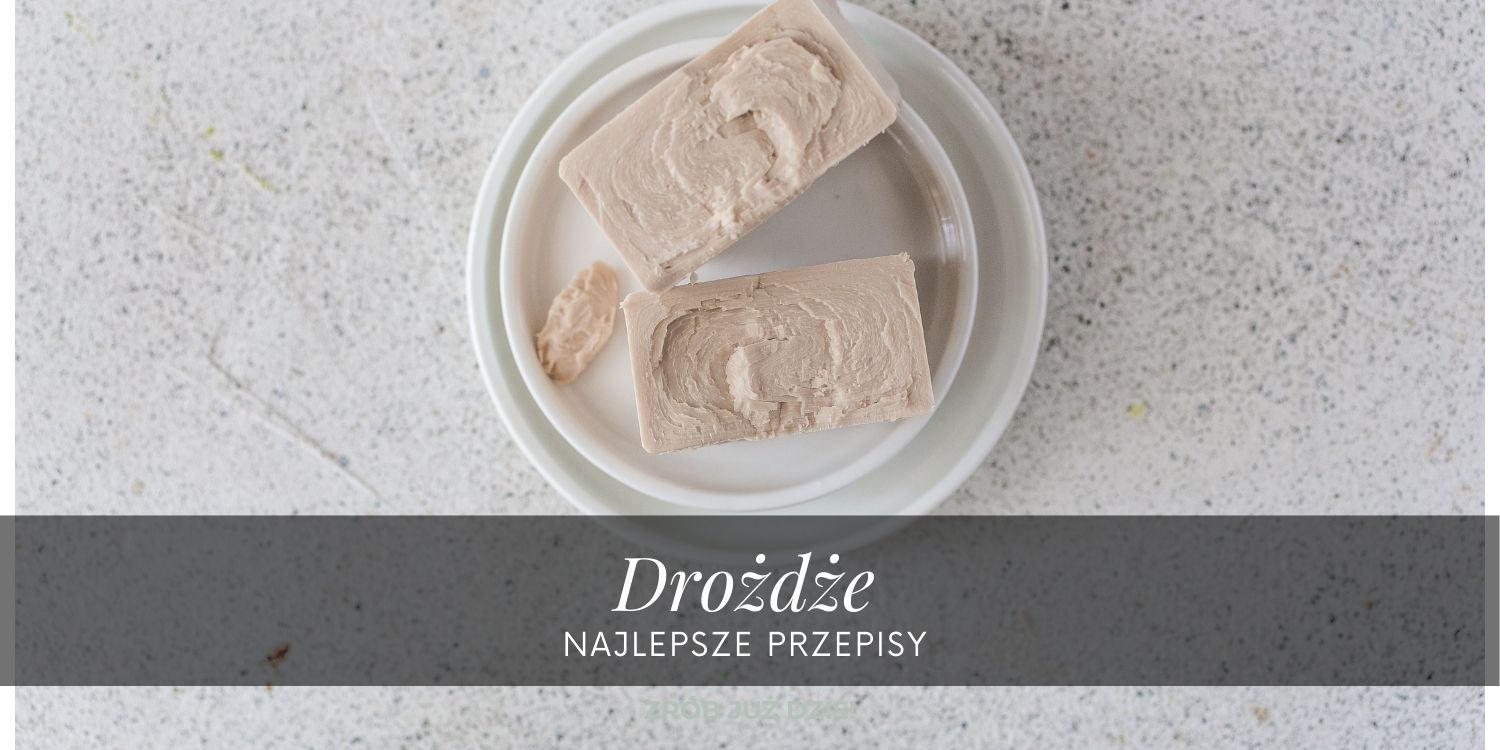
Fresh yeast should have a light color, a delicate aroma, a non-sour taste, and must not be dry or dried out. Such yeast guarantees successful baking.
Too much yeast can give baked goods a bad taste, and since fresh yeast works vigorously, you don’t need to add much to your bakes. For one kilogram of flour, 20-50 g of yeast is sufficient.
Salt added to yeast will “kill” it, while sugar will cause it to grow and multiply. In dough, after adding yeast, alcoholic fermentation occurs – carbon dioxide and alcohol are produced. Alcohol evaporates during baking, and carbon dioxide is trapped by the swelling gluten. In this way, after baking, the dough has a porous structure – bubbles are visible in it.
You can also use dried yeast in making cakes and bread. As a rule, half the amount of fresh yeast is used.
Discover my recipes for yeast cakes, delicious yeast rolls, pizza dough, and of course homemade bread

Jestem również tu